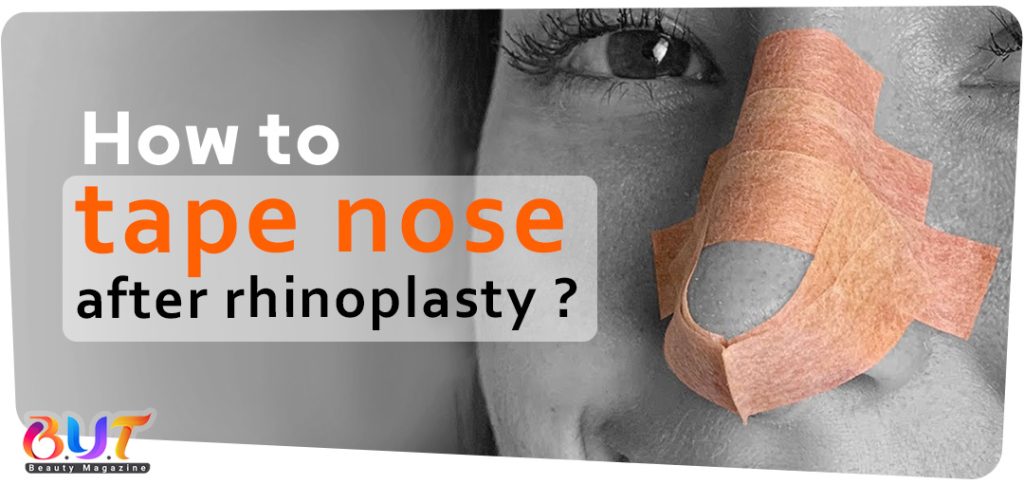
Taping The Nose After A Rhinoplasty Is Done To Help Control Edema (Swelling) Of The Nose. Early On After A Rhinoplasty, A Nose May Swell, Particularly Around The Tip Of The Nose. Taping Holds Light Pressure On The Skin To Prevent The Skin And Soft Tissue Of The Nose From Expanding. In Addition, After A Rhinoplasty The Underlying Shape Of The Nose Has Been Changed By Alteration To The Shape Of The Cartilage Of The Nose. Taping Allows The Skin Of The Nose To Help Conform To This New Shape.
After surgery, nose becomes swollen, which is obvious and is a natural complication of the operation. Postoperative nasal tapes help to eliminate this swelling faster and cause the nasal skin to adhere to the underlying tissue, thus facilitating the healing process in a shorter period of time.
But one of the most common questions and problems that people have after nose surgery is the correct way to tape the nose. Because if the nose tape is not applied properly after the operation, side effects may occur later. In this article, we want to talk about the correct way to tape the nose after rhinoplasty and its problems.
Nasal tape
Postoperative nasal taping, in addition to reducing nose swelling and inflammation; Prevents the formation of wound tissue and allows better nose formation.
It should be noted that proper taping to the nose causes the application of uniform pressure on the nose, and as a result, causes nose swelling to decrease in the same way in all nose parts.
Postoperative nasal tape can also be a warning to those around you that you have recently had rhinoplasty; Therefore, they should be more careful in dealing with you.
How long should I tape my nose after rhinoplasty?
The length of time to be taped after rhinoplasty often varies, ranging from two weeks to two months. This difference depends on the type of nasal skin; If the nose skin is thin, you can stop taping the nose after two weeks. In thick-skinned noses, this period lasts up to two months. Thick skin is a feature of fleshy noses.
A VCF file is actually a vCard file. Maybe you have a question, what is a vCard file?
The vCard file or virtual card, also called VCF, is actually a standard file format. Virtual cards are usually attached to e-mail messages, but these cards can also be exchanged in other ways, such as multimedia messaging services, exchanges on the web, in instant messaging, or through QR codes.
Content of VCF files
Virtual cards can include information such as: name, address, phone number, email address, web address (URL), logo, photo, etc., which are used to store contact information.
VCF files are simple text files that usually contain information such as the contact's name, email address, physical address, phone number, fax, and other specifications and information. VCF is a contact information storage format that stores various data in it. For example, when you backup your Android phone contacts, your contacts will be saved in the form of a VCF file.
The main application of the VCF file and format
One of the fast and practical features of the Android operating system is that you can make a backup copy of your phone contacts, so that you can use it to transfer contacts from one Android phone to another phone or tablet if necessary. Contacts exported from Android phones are saved in VCF file format. That is, you can prepare an output in VCF format from the contacts section of your phone and use this output in other tools such as your new phone or tablet, or in email programs such as Outlook or Gmail or iCloud, etc.
VCF files are used to read and store contact information. VCF file format is the only usable format that you can transfer contacts in your mobile phone book. The remarkable thing about this file is its generality. Your mobile phone (whether it is Android or iOS) easily accepts this list of mobile numbers and this output in VCF format.
VCF files can be used in smart and ordinary mobile phones. Suppose you are going to change your mobile phone, you should take a backup copy of your previous mobile phone contacts and output it as a VCF format file. Then transfer this file to your new mobile phone and easily use the contact information of your previous mobile phone in the new mobile phone.
Today, cloud services have simplified many complex tasks. By creating a user account in cloud services, which Google and Gmail are one of the famous cases in this field, you can upload files automatically and download and transfer them automatically to other devices that are connected to the same user account.
This is called syncing. One of the useful and interesting applications of the synchronization method is adding contacts in different devices, which is easily done through the Internet and Gmail.
Transferring contacts from one Android phone or tablet to another or from an iPhone to another is very easy if you use cloud services such as Google's Gmail or Apple's iCloud, but if you don't have access to the Internet, you can do it manually using a file. VCF that contains all the contacts.
In general, why should we convert the Excel file to mobile phone contacts (VCF)?
Maybe you need to send your ads to the mobile numbers that you have in the Excel file or convert vcf to excel using your mobile phone on social networks. This is where you should be able to add those mobile numbers to your mobile contacts and use them for advertising purposes.
Despite the SMS sending panel, some people plan to advertise directly from their mobile phones, which is a smart thing because many phone numbers across the country have blocked their advertising SMS and with panels Your SMS, messages and advertisements will not reach them.
And most importantly, sending messages and advertising to the mobile numbers of your contacts who are definitely familiar with your business will have a great response, which requires saving all the numbers of your customers and contacts in VCF format in your mobile phone. Is.
In this article, we tried to explain in a clear language what the VCF format is in general and what it is used for. We examined the various uses of this format so that you, dear ones, can use this item in the best way and with sufficient knowledge in your businesses and in mass advertising.
Saturday, August 20, 2022
Medications after rhinoplasty
If you are planning to have a nose job, you need to know about taking different medications. During this period, some medications are allowed and some are necessary, but some others might be very dangerous. Some medications are so dangerous that they should not be taken for weeks or even months before surgery. Reading this article will help you to have useful information about taking different types of medicines.
Things to know before taking any medications
Before performing rhinoplasty, we need to know a few points:
* First of all, it is necessary to do the needed tests before the nose surgery and if you have any disease, discuss it with your doctor. This is because your doctor will prescribe the right medication for you, depending on your body and your medical history.
* During the operation and until the end of the recovery period, do not take any medication arbitrarily and without consulting your doctor. All medications should be taken exactly as your prescription.
The medications which are mostly taken after rhinoplasty
Medications prescribed after rhinoplasty include: antibiotics, painkillers, cold pills, nasal drops, nasal wash serum, prednisolone tablets, and a variety of ointments, some of which are described below:
Antibiotics
The main drug used after rhinoplasty is antibiotic that must be taken exactly as prescribed by your doctor. Antibiotics prevent infection and therefore their proper and timely use is very important. Amoxicillin 500 capsules are one of the most common antibiotics commonly prescribed to patients.
Painkillers
Painkillers are usually used after a meal to reduce pain and swelling. Most doctors and surgeons prescribe gelofen and naproxen tablets. Be sure to use the painkiller you have been prescribed only if you feel pain.
Cold pills
Because runny nose and sneezing can interfere with the healing process of damaged tissues, doctors usually prescribe cold pills up to three days after removing the dressing of the nose.
.
Nasal drops
After rhinoplasty, nasal drops are usually used to prevent bleeding or to open the airways. Be aware that long-term use of these drops can damage the nasal mucosa and also make you dependent on it.
Usually patients reduce the concentration of the drop after a few days by adding water to the solution and gradually reduce its use to zero.
.
Anahil Pills
Anahil pill is an adjunct medicine that in addition to reducing swelling and bruising on and around the nose, is also very helpful in relieving skin inflammation.
Corticosteroids
Sometimes doctors prescribe corticosteroids to reduce inflammation, including prednisolone tablets. These drugs have many side effects and their use must be controlled and under the supervision of a doctor.
Ointment
Various ointments can be used to repair damaged tissues and sutures faster. Tetracycline ointment is usually used for the inside of the nose and zinc oxide ointment is used for stitches on the skin.
.
Which medications should not be taken after rhinoplasty?
Unfortunately, some people think that there is not much difference between painkillers and that prescribed painkiller can be changed or used in higher doses without consulting the doctor. However, this perception can have irreparable consequences for patients because some painkillers reduce the concentration of blood and increase bruising and bleeding after surgery. Ibuprofen, Advil, diclofenac and naproxen are some of the painkillers that should not be used after rhinoplasty. Medications that are contraindicated after rhinoplasty include:
Piroxicam
Piroxicam is one of the most widely used drugs to reduce pain and inflammation, especially muscle pain and inflammation. This type of painkiller should not be used after rhinoplasty.
.
Blood thinners
Blood-thinning drugs such as aspirin, warfarin, and beryllium are banned after surgery. These medications should be stopped at least two weeks before and after surgery.
Some supplements, such as vitamin E tablets, are blood-thinning and must not be consumed after surgery.
Isotretinoin
Also known as Accutane, which is prescribed for people with oily skin and pimples, it is one of the most dangerous drugs after rhinoplasty. In very special cases, this drug may be prescribed temporarily for people after rhinoplasty, but its arbitrary use can have a negative effect on the final results of the nose job. It is recommended that people who have taken this medicine should delay their nose job for at least a year.
Use sunscreen after rhinoplasty
It is very important to use a good sunscreen for the face for the postoperative period, because the skin becomes very sensitive to sunlight after surgery and becomes very vulnerable. Thus, it is recommended that all patients use sunscreen when necessary.
Final points
Note that medications must be taken in a timely manner and as prescribed by your doctor.
As mentioned, only take painkillers as long as you feel pain.
Do not manipulate the nose for 2 months after the operation.
Tell your doctor immediately if you experience symptoms such as nausea, shortness of breath, diarrhea, skin rash, and fever above 38 degrees after discharge and taking the medications, or if you experience increasing pain and redness at the operation site.
Wednesday, August 17, 2022
What is a vcf file ?
If you have decided to backup your contacts on Android phones, you have probably seen the VCF format on your phone. But what is a VCF file? What is its use? What is its content and how can it be opened? In this article, we want to explain the easiest way to convert VCF file to Excel.
What is a VCF file ?
VCF is stand for Virtual Contact File. VCF files, also commonly referred to as vCards. A VCF file is a standard file format for storing contact information. It typically includes a name, address, phone number, email address, and other contact information. In addition, VCF files also support custom fields, images, and other types of media.
A VCF file normally includes the contact’s name, address, email address, phone number, and other contact information for the person creating the file.
VCF files are often used to transfer contact information between address books and can also be attached to email messages. VCF files can be used on Windows and Mac operating systems and are frequently used on iPhones to load contacts directly into the user's mobile device.
How to create a VCF file ?
Also, by backing up your contacts on Android phones, the operating system creates a VCF file that contains the information of all your contacts.
Also You may create VCF files from scratch by creating a new contact and exporting it. For example, in Microsoft Outlook, you can create a contact, then select File → Save As to create a VCF file.
How to open a VCF file ?
You can open VCF files with various applications. Windows users can open vCards with Windows Contacts and Microsoft People and Microsoft Outlook.
Since vCards are saved in a text format, you can also open them with a plain text editor. However, the files may also include a block of binary data, which is often used to store a photo. Also, the information in the file will not be displayed the same as if it was opened in a contacts program.
But the easiest way to open a VCF file is to convert it to an Excel file through the vcftoexcel.com and open it in Microsoft Excel software. Through the link below, you can easily convert your VCF file to an Excel file quickly, safely and completely free of charge and open it easily.
Tuesday, August 16, 2022
Steroid injection after rhinoplasty
In rhinoplasty, corticosteroids, better known as steroids, are used to reduce post-operative nasal inflammation. Steroids are used both in the form of prescription oral medications such as pills and as injectable medications. After rhinoplasty, steroids can be injected directly into the nose to reduce the amount of swelling and scar tissue. In this article, entitled steroids injection after rhinoplasty, we want to address all the questions that have been on your mind.
Applications of c steroids injection after rhinoplasty
Steroids injections are performed after rhinoplasty or reconstructive rhinoplasty for several reasons. The most common use of corticosteroids to reduce rhinitis is to prevent scar tissue formation or to treat scar tissue created after rhinoplasty.
nose swollen after steroid injection
Swelling of the nose after surgery is inevitable, but the amount of swelling depends on the type of nose job performed, the amount of changes applied to the tissues, and the patient’s skin type.
In most people, the initial swelling after rhinoplasty resolves naturally, about 14 days after the operation. However, after this period, the person may still see swelling that takes several months or even years to resolve. In this case, the best rhinosurgeon recommends injecting steroids into the affected area to reduce the swelling created after rhinoplasty or reconstructive rhinoplasty and eventually eliminate it. In other words, injecting steroids into the nose accelerates the postoperative recovery process and determines the result of rhinoplasty even earlier than 6 to 12 months.
Normally, people with a fleshy nose will experience significant swelling after surgery. On the other hand, osteoporosis is much less and disappears in less time. Therefore, it can be said that steroid injections are mostly done for bulbous nose.
Injections of steroids after rhinoplasty to prevent scar tissue
In addition to reducing swelling, injecting steroids into the nose can prevent scar tissue. People whose nasal skin is relatively or very thick (it can be said that people whose have bulbous), the formation of scars and wounds with firm tissue between the bone or cartilage and the skin of the nose, after surgery, is very likely.
If the scar tissue in the nasal area is very large and does not allow the skin to adapt to the new shape of the nose, the cosmetologist will inject steroids after the nose operation to prevent the formation and spread of this excess tissue. Steroids may also be used long after rhinoplasty to treat scar tissue.
The right time to inject steroids after rhinoplasty
Following rhinoplasty, the timing of steroid injections depends on several factors. Some rhinosurgeons prefer to inject steroids 1 to 2 months after rhinoplasty to prevent further scar tissue from progressing. However, during this period, more of the swelling of the nose has disappeared on its own.
But some surgeons wait at least 3 to 4 months to inject steroids. After this time, most people who have had surgery are in the postoperative recovery phase. Injecting steroids during this time period will be beneficial; because it modifies and improves the new shape of the nose.
Also, steroid injections are considered safe and low risk during this period and the possibility of scar tissue formation is very low. Depending on the amount and strength of the injected steroids after 3 to 4 months, the scar tissue formed during this period is also treated. Many people experience the effects of steroids about 2 weeks after injection.
How many steroid shots can you get after rhinoplasty?
The number of steroids injected after rhinoplasty and steroid medications depend on the individual’s condition. Some people need to inject several units of steroids after primary surgery or revision rhinoplasty to reduce swelling and scar tissue. Others need to be injected only once. Some doctors prefer to inject steroids at intervals of 4 to 6 weeks. The presence of this time interval allows the nose to gradually reach its shape and form at the same time as the recovery period.
side effects of steroid injection after rhinoplasty
Steroid injections are considered a safe and effective procedure for relieving swelling of the nose and scar tissue after rhinoplasty. But like other processes, it cannot be said that it has no side effects, although these side effects are rare.
Just as steroid injections destroy scar tissue, they can damage healthy skin tissue and cause the skin to dent. It can also cause thinning of the skin or cause hypopigmentation (meaning spots on the skin that are lighter in color than the skin). In very rare cases, steroid injections may cause tissue loss.
Should the nose be taped after injecting steroids?
As you know, taping the nose reduces swelling of the nose; therefore, it is recommended to use nasal tape for 2 weeks after injecting steroids.
Do I need a steroid injection after rhinoplasty?
People who have the following characteristics can be considered a good candidate for post-nasal steroid injections:
The skin of the nose tip is thick.
The process of reducing swelling and inflammation of the nose and recovery after rhinoplasty is slow.
If the person has had rhinoplasty before.
If steroid injections are done properly and properly in qualified people, it can reduce the amount of inflammation and swelling in the nose and eliminate or prevent scar tissue after rhinoplasty.
Steroid injections to reduce nasal inflammation
You may have heard about steroid injections into the nose during surgery, and you may have wondered if your nose needs this nasal injection for swelling after surgery.
Swelling of the nose is an unavoidable part of rhinoplasty that begins right after the operation and the estimated period of complete remission is about one year. So you should take a normal look at it and not consider it a matter of concern.
In post-surgery examination sessions, the doctor assesses the progress of the recovery, sometimes recognizing that it is necessary to inject steroids into the nose, and prescribes it. Swelling in fleshy noses is often more severe, and for this reason, bolbuse nose are a common candidate for steroid injections.
The injection site of steroids in different parts of the nose is also a case that the doctor determines at his discretion and discretion. For example, sometimes the tissue behind the nose swells in the bridge of the nose, and this causes the arch created in the bridge of the nose to be hidden, which plays a very effective role in showing the beauty of the nose. Sometimes the nose tip becomes severely swollen, and injections of steroids are needed to control the swelling in this area.
In general, the need for steroid injections, the type of injection, the timing of steroid injections, the area of the nose where the steroids should be injected, and many other things are all at the surgeon’s discretion.
Saturday, August 13, 2022
Accutane after rhinoplasty | Isotretinoin
Isotretinoin or Accutane (commercial brand) is a common drug used to treat acne. Cystic and resistant pimples and acne, usually due to; Hormonal changes, high fat secretion, enlargement of skin pores, closing of pores or rapid multiplication of bacteria occur. Many cosmetic surgery applicants are young and undergoing treatment with isotretinoin (Accutane). Since the use of any drug should be considered before surgery, the interaction between isotretinoin and rhinoplasty is a question for many clients, which we have explained in this article.
What is Accutane ?
Accutane is a brand name drug containing isotretinoin, a derivative of vitamin A, which is taken in both oral and topical forms. High doses of vitamin A in this medicine help to improve and eradicate pimples and acne resistant to antibiotics or other topical treatments. However, due to the many side effects and effects of this drug on the liver and kidneys, isotretinoin should be used only with a specialist’s prescription. Isotretinoin is never recommended for concomitant rhinoplasty for the following reasons.
Uses of isotretinoin
In addition to treating chronic, cystic, and refractory acne, isotretinoin has other uses, including:
Prevention or treatment of some skin cancers such as squamous cell carcinoma
Improves problems with folliculitis (subcutaneous hair), such as rosacea
Treatment of flat and recurrent skin warts
Eliminate pores and blackheads on the nose
Thinning the skin of the nose using a topical form of the drug
Accutane side effects
Consumption of oral R Isotretinoin due to systemic release has several effects on body tissues, especially damaged parts. These complications include the following:
Lips dryness
Eyes dryness
Skin itching
Scaling
Itching of mucous tissue
Hypersensitivity and allergies
Dryness, redness and debridement of the skin
Delayed wound healing and skin damage
Dryness of mucous structures such as the mouth and nose
Hyperglycemia, which lowers the immune system and restorative power
Increased risk of skin scarring or excess flesh, especially in cases where a graft has been performed
Isotretinoin and rhinoplasty
The use of oral Accutane or Isotretinoin should be stopped for at least 6 months after any cosmetic surgery, especially nasal surgery. Some researchers also believe that the use of this drug is prohibited for two years after rhinoplasty because the cartilage and mucous tissue of the nose have not yet found their final structure. According to patient studies, people who started taking isotretinoin between 7 and 24 months after rhinoplasty developed deformity of the nose tip and a change in its cartilaginous structure. The cause of this complication is the shrinkage of the skin and the change in the structure of the nose tip. Therefore, the use of Isotretinoin should be at least 6 months apart from rhinoplasty or any surgery that involves cutting deep layers of the skin, such as deep exfoliation and laser treatment.
Side effects of Isotretinoin on rhinoplasty
Increase skin repair time
Create scars or extra flesh
Tilt the tip of the nose
Protrusion and bulging of the skin graft
Deformation of the soft tissue of the tip of the nose
Take Isotretinoin before rhinoplasty
According to the FDA recommendation, rhinoplasty is allowed 6 months after stopping Isotretinoin. There are three main reasons for the interaction between Isotretinoin and rhinoplasty:
Damage to the skin due to dryness
Bleeding in mucous tissues
Increased risk of depression following the use of Isotretinoin, which delays nasal repair. Performing any surgery, especially cosmetic type, is stressful and requires a strong spirit and immune system.
Does Accutane help rhinoplasty swelling?
In people whose skin on the nose is rough and thick due to the cartilaginous or fleshy structure of the nose, after a period of 6 to 1 year after the prohibition of isotretinoin after nasal surgery, isotretinoin can be used to reduce swelling and excess fat on the nose. The advantage of this small work is that the nose looks smaller, the skin becomes thinner and the pores of the nose are reduced.
Treatment of acne after rhinoplasty
There are more effective and less risky ways to reduce swelling, fat and thickening of the nasal skin after surgery. After surgery, in most people, the secretion of fat on the nose increases and the pores close due to the presence of plaster, dressing or adhesive. This can cause pimples on or around the nose. In many cases, the surgeon prescribes corticosteroid injections, which in addition to reducing swelling, help thin and shine the skin of the nose and have fewer side effects than taking isotretinoin.
Tips for using isotretinoin
Be sure to tell your doctor about all your medications before surgery
Patients treated with isotretinoin should have regular liver and kidney function tests.